At-Home and Direct Testing
Interpreting At-Home Test Results Without a Clinician
Learn to combine your test results with context and past data to avoid panic or false reassurance.
Miriam Osei-Bonsu
· 9 min read
Learn to combine your test results with context and past data to avoid panic or false reassurance.
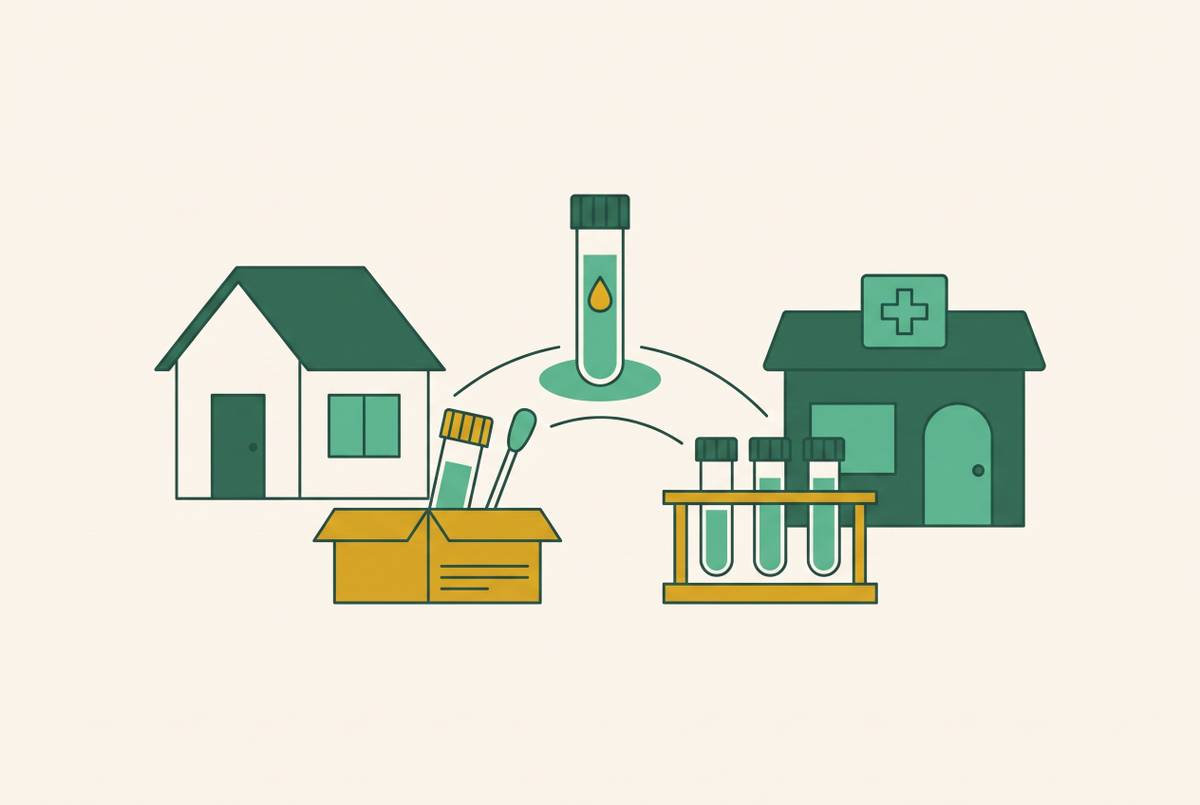
The choice between home and clinic testing depends on infection type, timing, and follow-up care.
Four markers separate platforms that catch early disease from those that don't.
Trends in fitness, glucose and heart rate matter more than individual readings.
Healthy adults with CGM data need context to interpret what it means.
Convenience matters less than which markers a kit measures and how it collects them.
Accuracy depends on which biomarker and collection method you use.
CIMT detects early arterial changes, but works best for intermediate-risk patients.
Sequencing finds inherited risks and drug responses, but not all results guide care.
Early screening can catch bone loss in younger adults with specific risk factors.
Reproducibility problems undermine the clinical value of current consumer microbiome tests.
Blood and imaging tests can distinguish cancers requiring treatment from those safe to monitor.