At-Home Hormone Test Kits for Testosterone and Estrogen
Convenience matters less than which markers a kit measures and how it collects them.
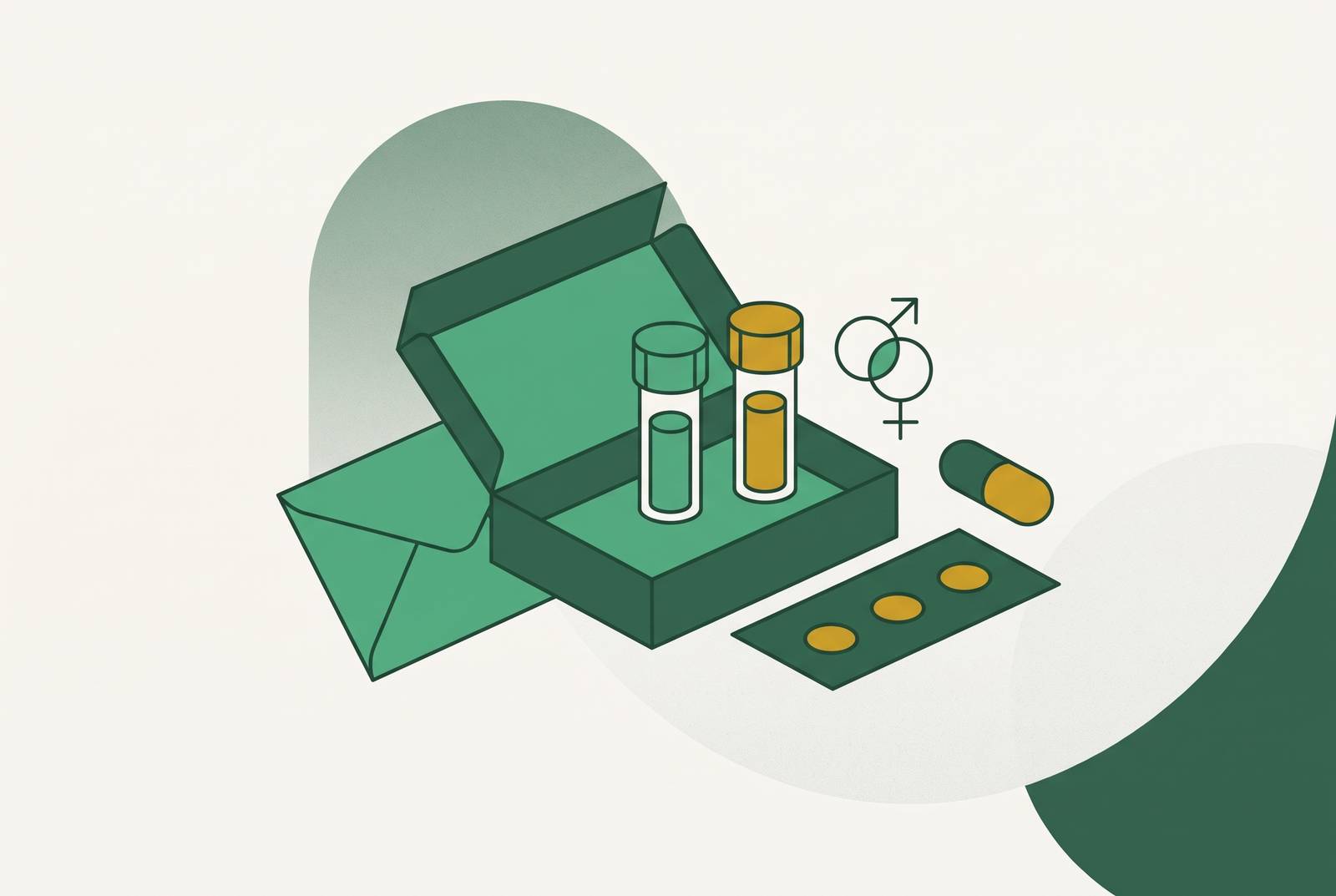
At-home hormone test kits for testosterone and estrogen can make testing easier, but convenience does not tell you whether a result will be useful. The strongest choice depends on which markers a panel includes, how the sample is collected, and what support comes with the numbers.
Why at-home hormone testing has moved beyond a convenience gimmick
Fatigue, low libido, mood shifts, irregular cycles, or unexplained weight change can leave someone looking for answers without a clear route to getting them. A kit in the mail offers an appealing first step, especially when traditional clinical pathways have not delivered the hormone insight someone wants. The appeal is easy enough to understand. Yet these symptoms overlap with multiple conditions, so choosing a test is more consequential than simply finding an easy way to collect a sample.
That overlap also sets a limit on what convenience can deliver. A kit may return a number without measuring the other markers needed to explain it, or use a collection method poorly suited to the hormone in question. More information is not automatically better information.
What testosterone and estrogen tests are actually measuring — and why the distinction matters
Sex hormone-binding globulin, or SHBG, is a useful place to begin because it acts as a gatekeeper. This protein binds both testosterone and estradiol in the bloodstream, controlling how much is available to tissues. The amount of it in the blood changes with age, obesity, thyroid function, and pregnancy. That makes a hormone’s total concentration only part of the picture. Two people with identical total testosterone can have very different amounts of free testosterone.
Total testosterone includes hormone bound to proteins, while free testosterone is the unbound, biologically active part, roughly one to two percent of the total. Consider someone whose total testosterone is “normal” but whose SHBG is elevated. Their free testosterone may be very low, with associated symptoms that the headline result does not explain. The total result alone can therefore mislead.
Estradiol is the primary estrogen in men, produced when testosterone converts through the aromatase enzyme, and supports bone density, joint health, libido, and cognitive function. Too much or too little can cause problems. For women, low SHBG can contribute to excess free testosterone, relevant to PCOS, acne, and hirsutism, while high SHBG can suppress free estradiol and produce menopause-like symptoms despite apparently adequate total estrogen.
A further question is where a hormone problem begins. LH and FSH are pituitary signals upstream of hormone production in the testes and ovaries. These markers help distinguish a problem in those organs from a problem in the brain’s signaling.
How sample type determines what a kit can reliably detect
Once the markers are clear, the next question is which sample can measure them reliably. Saliva, finger-prick blood spots, and venous blood draws differ in what can be measured, sample stability in transit, and clinical usefulness. The choice depends on the hormone being tested. A method useful for one hormone is not necessarily useful for another.
If the aim is to capture cortisol’s pattern across the day, saliva has a useful role for specific indications. Cortisol passes easily into saliva, and samples taken at home throughout the day can show how its level changes. Testosterone and estrogen present a different problem. Saliva is an ultrafiltrate of blood and should, in theory, reflect free hormone concentrations, but salivary sex steroid measurements do not reliably correlate with serum levels and can vary widely within the same person. Food, drink, and oral hygiene can also contaminate the samples.
If the aim is an initial total testosterone screen, a finger-prick blood spot can be useful. Under ideal, validated conditions, its accuracy can approach that of a venous draw. Routine collection is less dependable, however, with higher variability and rejection rates. With so little blood in a sample, markers such as SHBG and ultra-sensitive estradiol are also harder to measure reliably, which limits how much a kit can show.
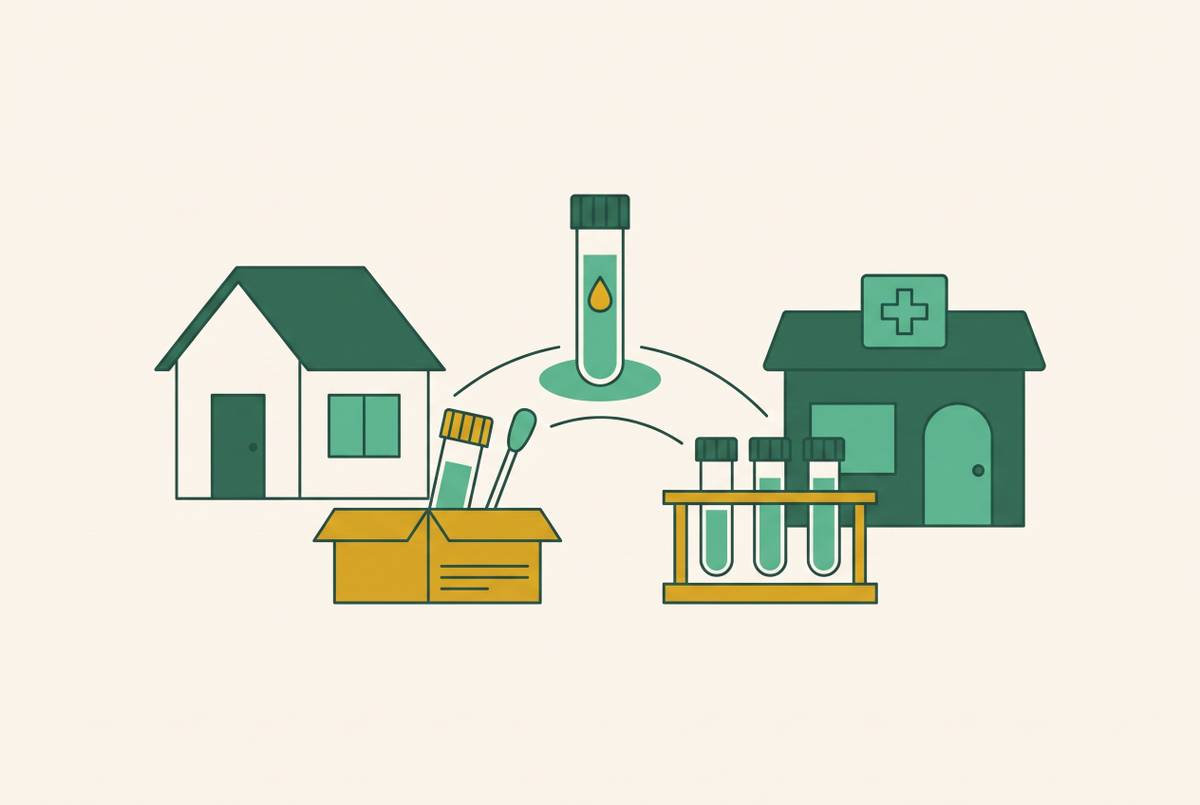
For that broader panel, venous blood offers more scope. Its larger volume supports sensitive estradiol measurement and calculated free testosterone using established equations, while clinical guidelines are calibrated to this sample type. Direct-to-consumer lab services can offer draws without an appointment, narrowing the convenience gap with a mailed kit. Blood-based methods give more reliable results for testosterone and estrogen, and a venous draw avoids many of the problems with taking a finger-prick sample. It is also the sample type a clinician will require for confirmation if testing leads to a treatment conversation.
Why CLIA certification matters and what it does and does not guarantee
CLIA certification applies to the laboratory processing a sample. A certified lab must meet federal standards for accuracy and quality control that match those for hospital laboratories. That is a genuine quality signal. It indicates rigor at the analytical stage, but it does not extend to the kit’s instructions or sample handling between home and lab.
Even an excellent laboratory can give unreliable results if a sample is contaminated or was poorly collected. Most at-home hormone kits are not approved by the federal regulator as diagnostic devices, making the processing lab’s certification a key quality assurance consumers can verify. The practical filter is therefore to confirm CLIA-certified processing, then assess the collection method and panel. Certification is necessary, but it is not sufficient.
What a panel needs to include to be clinically useful for testosterone and estrogen
For a man assessing testosterone and estrogen, the minimum useful panel includes total testosterone, free testosterone, SHBG, and estradiol. Each answers a different part of the question. Total testosterone gives the baseline reading, while free testosterone and SHBG help show whether that reading reflects how much hormone is available to tissues. Estradiol adds context for reduced libido, joint pain, or mood changes that testosterone alone may not explain, and is essential for men on or considering hormone therapy. LH and FSH add information when the aim is to understand the source of an imbalance.
Established clinical guidelines use below 300 ng/dL as the widely accepted point at which total testosterone is low. That threshold remains a starting point for assessing total testosterone. A panel’s usefulness comes from the relationships between its markers.
Reproductive-age women exploring cycle health or PCOS-related symptoms benefit from the context provided by estradiol, progesterone, LH, FSH, testosterone, and SHBG together. Perimenopause and menopause raise a different question. University of Utah Health warns that FSH levels can vary greatly between people and across the menstrual cycle, so FSH alone is not a reliable marker of menopausal status. Adding estradiol and LH gives a more stable and interpretable picture than an FSH-only kit.
These distinctions give readers a basis for approaching narrow panels cautiously. Total-testosterone-only kits leave gaps in hormone availability, while FSH-only menopause kits ask one fluctuating marker to answer too much. A saliva panel marketed as measuring “bioavailable” testosterone or estrogen presents a separate limitation. Its results do not reliably match serum measurements, despite its appeal in theory.
How to collect a sample that doesn't undermine the test before it reaches the lab
Once a test has been chosen, collection becomes the part of accuracy most directly within the consumer’s control. For testosterone, timing is the highest-impact variable. Levels typically peak between 7 a.m. and 10 a.m. and decline through the day, while clinical reference ranges are calibrated to morning values. An afternoon result can therefore look low because of normal daily variation. To obtain a result that those guidelines can be applied to, collect the sample in the morning.
For a finger-prick sample, warm the hand beforehand with warm water or brief exercise to encourage natural blood flow. Avoid squeezing the finger to force out blood, because this can cause hemolysis, degrading the sample and skewing results. The technique is part of the test’s reliability. Follow fasting instructions too if the panel includes metabolic markers as well as hormones.
Before taking a saliva sample, go without food, drink, or oral hygiene for as long as the instructions require. Avoiding contamination removes a preventable source of error in saliva testing. For cortisol, samples taken at set times across the day show more than a single sample. Even careful collection has limits, however, because stress, illness, sleep quality, and acute exercise can change testosterone levels. Any one result remains a snapshot rather than a diagnosis, and an out-of-range finding warrants follow-up testing before clinical action.
Reading your results without over-interpreting a snapshot
A result is most useful as a screening signal that directs the next conversation. Reference ranges show values across a population and do not set a target for each person, so a result inside or outside a range does not settle what it means for that person’s care. For men, 300 to 1,000 ng/dL is often given as the normal range for total testosterone. A reading of 310 ng/dL falls within it, but symptoms may still need to be discussed with a clinician.
Women make much less testosterone, so the male reference range does not apply to them. A result needs a female-specific range, which basic kits do not always spell out. The markers included also shape what can be concluded. Total testosterone can indicate whether the overall level is plausible, but without SHBG and free testosterone it cannot explain how much is biologically available to tissues. A result within range therefore does not rule out a hormonal contribution to symptoms.
The reverse deserves equal care. An out-of-range result is a prompt for confirmation with a venous draw, and most clinical protocols require laboratory confirmation before a therapeutic step. A clinician can place the result against symptoms, history, and the other biomarkers measured. That conversation prevents a screening signal from becoming a conclusion it cannot support on its own.
Over time, consistent testing can provide a more useful picture than an isolated value. Results collected at the same time of day and under similar conditions make patterns easier to interpret. Consistency gives those comparisons a firmer basis. The value of self-monitoring lies in building an informed record, with professional guidance, rather than treating each new reading as a verdict on health.
What to look for in a testing service that supports this kind of proactive monitoring
For testosterone and estrogen, blood-based testing through a CLIA-certified lab is the minimum needed for results of a quality that can be discussed with a clinician. The panel then needs to fit the question being asked and the person’s stage of life. For men, that means the core combination of total testosterone, free testosterone, SHBG, and estradiol, with LH and FSH when the source of an imbalance is being explored. For women, the service should offer the life-stage-specific context.
Results that a clinician has reviewed and explained in light of the person’s circumstances help someone without medical training understand what a number can and cannot show. Pricing should also be transparent and predictable, with the panel cost stated upfront. Repeat testing should not require a new referral or clinical encounter each time.