Blood Draw Preparation Mistakes That Skew Lab Results
What you do before the needle matters more than lab machines.
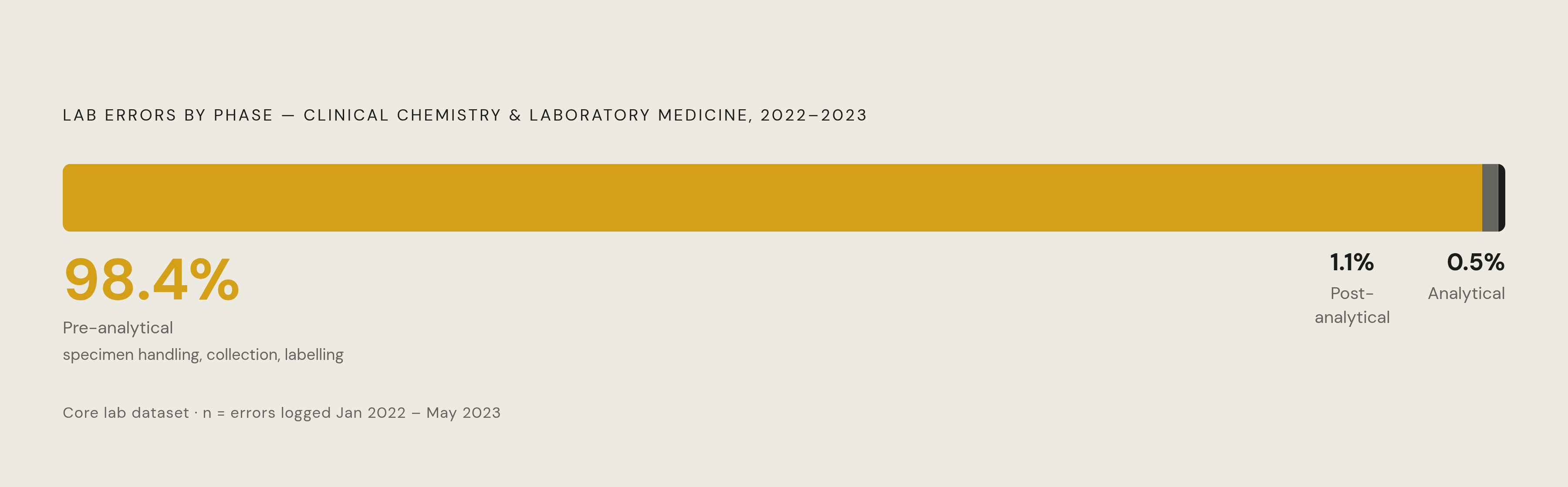
Most people picture lab errors as something that happens inside the machine: a miscalibrated analyzer, a technician misreading a result, some equipment failure at the lab itself. That's not where the errors actually happen. Research on laboratory diagnostics puts the pre-analytical phase, everything that happens before the sample even reaches testing, at the source of 60 to 70% of all lab errors. A dataset from Clinical Chemistry and Laboratory Medicine sharpens that even further: of errors logged at a core lab between January 2022 and May 2023, 98.4% were pre-analytical. Analytical errors, the ones happening inside the machine, accounted for just 0.5%. Post-analytical errors (reporting, transcription) made up the remaining 1.1%.
That's a strange thing to sit with. The machines are basically not the problem. What happens in the 24 to 48 hours before someone rolls up their sleeve, that's the problem. A meaningful chunk of that window sits entirely within the patient's control, covering what they ate, what they drank, whether they slept, whether they hit the gym, and what supplements sit in their bathroom cabinet. This piece walks through each of those variables one at a time, with the specific markers each one distorts and the exact windows that matter.
How fasting windows affect results when patients get them wrong in either direction
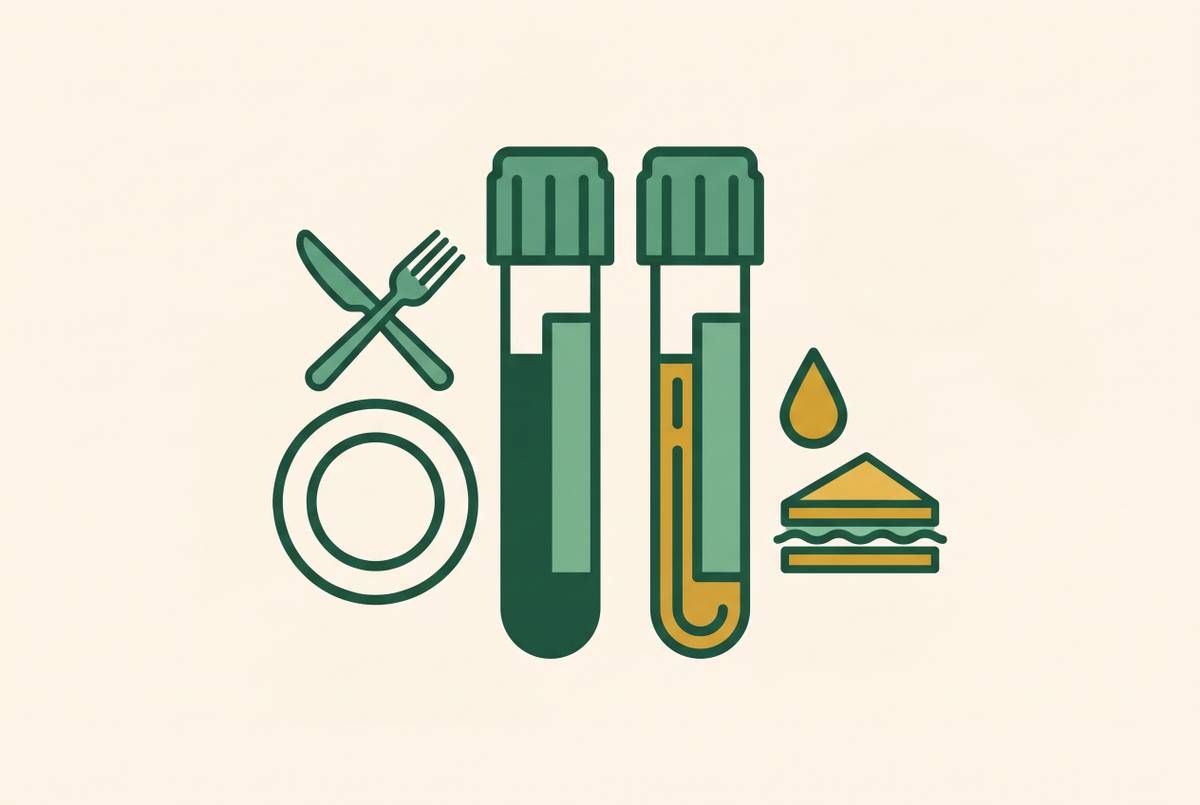
Most metabolic panels ask for an 8 to 12 hour fast. Triglycerides specifically, some labs push that to 12 hours, since triglycerides respond to food faster and more sharply than almost any other marker on a standard panel.
Eating before a draw does a few predictable things. Glucose and insulin rise, temporarily, in direct response to whatever was just eaten. Triglycerides climb, sometimes substantially, because dietary fat shows up in the bloodstream within hours of a meal. And "fasting" trips people up in ways that feel like exceptions but aren't: coffee with cream counts as breaking the fast. So does a glass of milk, a sugar-sweetened gum, basically anything with calories in it.
But there's a less-discussed failure mode running the opposite direction: over-fasting. Someone convinced that a longer fast means "cleaner" numbers might go 24, 48, even 72 hours without food, trying to game the test. Extended fasting in the 2 to 4 day range shifts the body into fat-burning metabolism, and that appears in blood work: glucose drops, triglycerides and ketone bodies move, amino acid profiles shift. Some facilities actually advise against fasting past 14 hours, precisely because it invites dehydration and a stress response that muddies the picture further. A patient who starved themselves the day before a draw to "get better numbers" isn't looking at their normal physiology. They're looking at a body in an unusual metabolic state that happens to also be well outside its baseline.
And not every test wants a fast in the first place. HbA1c doesn't require one. Neither do most hormone panels, though whoever ordered the test can confirm that. Non-fasting lipid screening is considered acceptable for some lower-risk adults. Triglycerides remain the one lipid marker where fasting stays the standard, because it's the marker most sensitive to what was on the plate the night before.
Effects of black coffee, alcohol, and nicotine on specific markers
Black coffee feels like it should be a free pass during a fast. No calories, no sugar, just water and caffeine. That assumption misses what caffeine actually does inside the body.
Caffeine is a diuretic. It concentrates the blood, and that concentration can push red blood cell counts and creatinine up on a CBC because there's relatively less plasma diluting them, even though the body didn't make more red cells overnight. Caffeine also triggers a catecholamine response, a modest liver glucose release, not enough to spike blood sugar dramatically, but enough that the number isn't a true resting baseline anymore. It can raise cortisol too, and that ripples into other hormone tests ordered on the same panel. Caffeine also lingers. Some guidance recommends staying off coffee for a full 24 hours before major hormone or glucose testing, since the interference here is pharmacological rather than caloric. It's pharmacological.
Alcohol works on a different set of markers, but the timeline is similarly unforgiving. Glucose and triglycerides can both rise significantly after drinking, and the standard advice is at least 24 hours dry before a draw. Alcohol also acts on the nervous system in ways that can shift cortisol the day after drinking, which matters a lot for anyone specifically testing adrenal function or stress hormones.
Nicotine moves fastest of the three and touches the widest range of markers. Smoking raises inflammation markers, shifts cholesterol ratios, pushes white blood cell counts up, and affects both glucose metabolism and hormone levels. The recommended gap is at least 1 to 2 hours before a draw, longer if it's realistic. For anyone testing glucose, insulin, cortisol, or cardiovascular risk markers, that gap matters even more. And if quitting for the morning genuinely isn't an option, telling the clinician lets them interpret the result in light of it. A result read without that context is a result read wrong.
What ties these three together: none of them register as "food" to most people. Someone can fast perfectly, skip breakfast, skip lunch, and still walk into a draw having introduced three separate confounders through a morning coffee, last night's glass of wine, and a cigarette in the parking lot. All three are legal. All three are normal parts of daily life. None of them are neutral to a blood panel.
How exercise in the days before a draw skews inflammation, liver, and hormone markers
A hard workout does something specific and measurable to blood chemistry, and it lasts longer than most people assume.
Strenuous exercise temporarily spikes liver enzymes, creatine kinase (CK), and inflammation markers, all tied to muscle breakdown and the body's repair response. It also raises cortisol and adrenaline right after a workout. Neither level reflects a resting baseline. White blood cell counts can climb too, which on its own can look like a false positive for infection or inflammation to anyone reading the panel without context.
How long does this linger? For someone who exercises regularly, the standard guidance is to avoid strenuous activity for at least 2 days before a draw. For someone newer to lifting, whose muscle-damage response tends to run higher, that window stretches out to roughly 7 days.
A compounding error happens here, and it's not obvious until you see the numbers. A randomized crossover study of 16 men found that cardiac troponin T (cTnT), a marker used to detect heart damage, surged 37 to 38% higher at 120 to 240 minutes post-exercise when the subjects were sleep-restricted compared to when they were well-rested. So exercising after a bad night's sleep doesn't just add two separate confounders to a panel. It stacks them on the same marker, and the stacked effect is larger than either one alone.
None of this means becoming sedentary for a week before a blood draw. A walk around the block isn't the issue. The concern is specifically intensity, exertion that causes real muscle breakdown and a genuine inflammatory response.
How poor sleep corrupts glucose, inflammatory, and hormonal markers even without any other preparation error
Sleep deprivation alone, with nothing else done wrong, is enough to shift a blood panel in a direction that has nothing to do with someone's actual health.
A single night of restricted sleep can raise fasting glucose and push insulin resistance markers upward. It also raises inflammatory markers and disrupts hormonal patterns, in ways that can show up on a panel as something other than what they are. None of that requires skipping the fast, drinking the night before, or hitting the gym. Bad sleep does it on its own.
The guidance runs 7 to 9 hours of sleep for at least two nights before a draw, not just the night immediately prior. That "two nights" detail trips people up. Someone who slept badly Tuesday and then had a great night's sleep Wednesday, walking into a Thursday morning draw, may still be carrying some of Tuesday's disruption into the results.
This matters most for anyone tracking metabolic trends over time. Someone testing quarterly to watch fasting glucose or inflammatory markers drift, if one of those draws lands after a night of travel, a stressful week, or a newborn keeping the household up, that data point reflects the disruption. Plotted next to three other data points from well-rested mornings, it throws off the whole line.
And this loops back to the exercise and troponin finding from above. Sleep deprivation doesn't only distort its own markers. It amplifies whatever else is going on, functioning less as a single variable to control and more as a multiplier that intensifies every other mistake on this list.
Biotin: the supplement that silently corrupts thyroid, hormone, and cardiac panels
Biotin deserves its own section, because it's probably the single most under-recognized source of lab error on this entire list, and it's sitting in most people's medicine cabinets right now.
It's in nearly every multivitamin. It's in prenatal vitamins. It's in essentially every "hair, skin, and nails" formula on the market, and some of those products, Nutrafol among them, contain biotin doses at 10,000% of the recommended daily value. Patients rarely think of a hair-growth gummy as a medication, so when a phlebotomist asks about supplements, biotin doesn't come up.
The mechanism is specific. Many immunoassays rely on a biotin-streptavidin binding system to detect hormone levels. Flood the bloodstream with extra biotin, and it competes with the assay's own reagents, throwing off the reading, even though the patient's actual hormone levels haven't moved.
The pattern differs depending on the panel. On a thyroid panel, biotin can produce falsely high T3 and T4 alongside a falsely low TSH, a combination that mimics hyperthyroidism closely enough to mislead clinical interpretation. On hormone panels, biotin can falsely elevate testosterone, cortisol, and estradiol. On a cardiac panel, biotin can falsely lower troponin, which in an emergency room setting could delay treatment for someone actually having a heart attack.
Published case reports document patients whose abnormal values normalized entirely once biotin was discontinued, with nothing found to be wrong once the supplement was out of the picture.
Other supplements that alter results and medications to manage before a draw
Biotin gets the headline, but it's not alone. A 2025 study using the Proseek Multiplex Metabolism panel on 22 healthy adults found twelve biomarkers dropped significantly after eating, eight of them within 30 minutes and four still suppressed at the two-hour mark. Protein biomarker panels, in other words, respond to recent food intake faster and more broadly than most people would guess.
Beyond that, a handful of common supplements deserve their own flag. Fish oil and omega-3s can shift triglyceride readings. High-dose supplements more broadly can interfere with specific assays in ways that aren't always obvious. Timing of supplement intake relative to a draw matters for any supplement that directly affects the markers being tested.
Medications cut both ways, and this is where the advice gets counterintuitive. Stopping a chronic medication, levothyroxine, a blood pressure drug, an antiepileptic, before a draw doesn't produce a "cleaner" baseline. It produces a result that no longer reflects how the patient's condition is actually controlled day to day. That's not a preparation best practice, even though it can feel like one. The one real exception runs the other way: patients on thyroid medications should ask their clinician whether to time their dose around the draw, since timing can affect how thyroid hormone levels read on the panel.
One simple failure causes this: not the supplement, not the medication, but not mentioning it. A biotin gummy or a skipped blood pressure pill doesn't ruin a result on its own. What ruins it is a clinician reading that result with no idea it happened. Bring the actual list, every supplement, every medication, with dosing times, to every draw. Ask specifically whether anything needs to be timed differently around the appointment. That one conversation turns a confusing result into an interpretable one.
Dehydration and the physical state of the patient at the moment of the draw
Water is the one thing during a fast that's not just allowed, it's actively encouraged. Skipping it backfires.
Dehydration concentrates the blood (hemoconcentration), and that concentration can distort electrolytes when there's less plasma volume to dilute them. It can also throw off kidney markers like creatinine, making kidney function look worse than it actually is. There's a practical side effect too: a dehydrated patient tends to have harder-to-find veins, which raises the odds of a technique error during the draw itself.
Stress does something similar through a completely different channel. Acute anxiety can affect hormone and stress marker readings, directly relevant to anyone testing adrenal function. Skipping a few minutes to sit and calm down before sample collection is a documented preparation error, not a minor one. The white-coat effect, well known for spiking blood pressure readings in a doctor's office, appears in blood chemistry too, not just on a cuff.
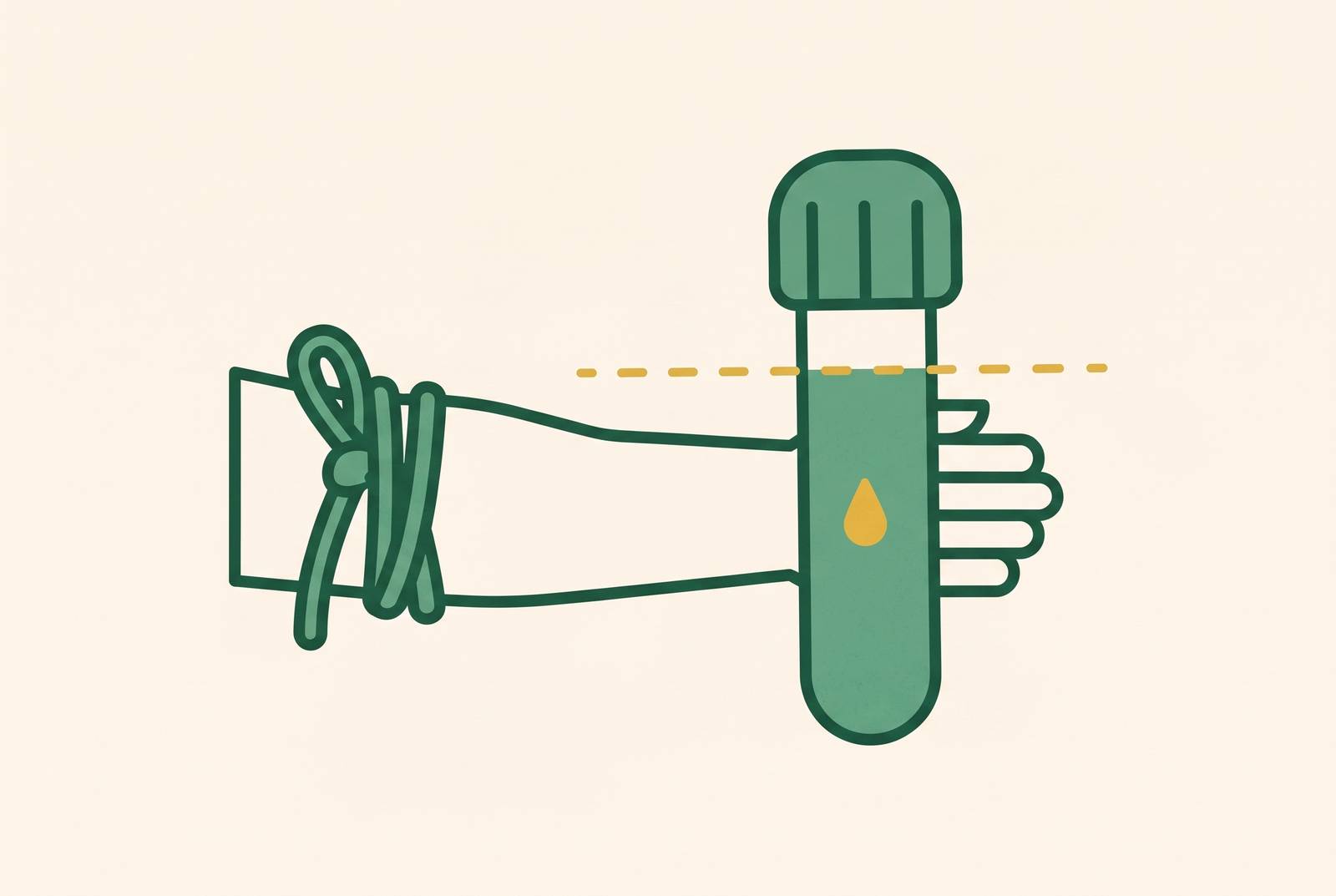
A couple of smaller physical details affect the accuracy of the sample. Leaving a tourniquet on too long, beyond what protocols call for, causes localized hemoconcentration right at the draw site. And pumping a fist repeatedly to "get the vein up," something plenty of patients do out of habit, artificially inflates potassium readings. These are recognized sources of pre-analytical error.ly, because it's such a common, well-meaning mistake.
Drink at least 8 ounces of water in the two hours before a draw, show up with enough time to sit quietly first, and say something if needle anxiety is a real factor. All three cost nothing and take maybe five minutes combined.
Collection-side errors the patient can watch for and influence
Everything above happens before anyone touches a needle. But the draw itself carries its own set of risks, and while patients don't control the technique, they can watch for the signs that something's off.
A tourniquet left on too long, as mentioned, skews potassium and a handful of other markers. So does repeated fist-pumping, however automatic that motion feels when someone says "make a fist." Both are worth gently flagging if a patient knows what to look for.
Tube order affects results too, and it's entirely a lab-side responsibility, but it's worth understanding why. Different additives in different tubes (anticoagulants, clot activators) can cross-contaminate if drawn in the wrong sequence, and that contamination can distort results on more than one panel from a single draw. A patient can't control this, but noticing if multiple tubes are being filled and asking a quick question about it isn't out of line.
Hemolysis, red blood cells rupturing during or after the draw, is another factor that can throw off results. It happens when blood is drawn too forcefully through too small a needle, or when a sample gets shaken or handled roughly afterward. Hemolyzed samples throw off potassium, an enzyme marker used to detect tissue damage, and several other markers, and a good lab will flag and often reject a hemolyzed sample rather than report it. Patients can't prevent this directly, but knowing it exists helps make sense of an unexpected result or a request for a redraw.
None of this replaces trusting the phlebotomist's technique. But a patient who understands what a good draw looks like, calm arrival, minimal tourniquet time, no fist-pumping, steady handling of the tubes afterward, is in a much better position to ask the right question if something looks rushed. Given that pre-analytical error accounts for the overwhelming majority of lab mistakes, that kind of attention reflects the process's actual stakes. It's just paying attention to the part of the process that decides what the number on the page means.